What is Freedom For?
exploring telos

This week brought with it a meeting with my oncologist and the official decision to stop exemestane. If you’re following along, you’ll know that this is a med meant to suppress estrogen in my body for the purpose of preventing future recurrences of breast cancer. It also caused a daily migraine from 1-5 pm. While I was taking it people were praying for me, laying hands on me, literally interceding against the devil for my ability to participate in life. I don’t miss this medication.
The problem with stopping it, however, is that cessation increases my chances of cancer recurrence by about 5% and a recurrent cancer could come back in a way worse place, like my spine.
It’s hard to wrap my head around cancer coming back because I feel so fine right now. I haven’t felt better in my 40s. But the seed of this menace is in my system, meaning I will always be under surveillance during what remains of my one wild and precious life. And as such, failure to do the recommended regimen brings risks. I crossed this threshold once already this season when I decided on a partial mastectomy instead of a full; and now I look out over the murky “gamble with my life” horizon again.
These risks came into full view when, last Thursday, I listened to Ross Douthat interview Ben Sasse (the link is gifted if you don’t have the NYTimes). A former republican senator from Nebraska, Sasse is soon to die of pancreatic cancer at the age of 54. His face looks like he got mauled because the experimental drug he’s on makes it difficult for him to grow new skin. He’s doing this drug regimen to live a few more months, to spend time alongside his wife and 14 year old son.
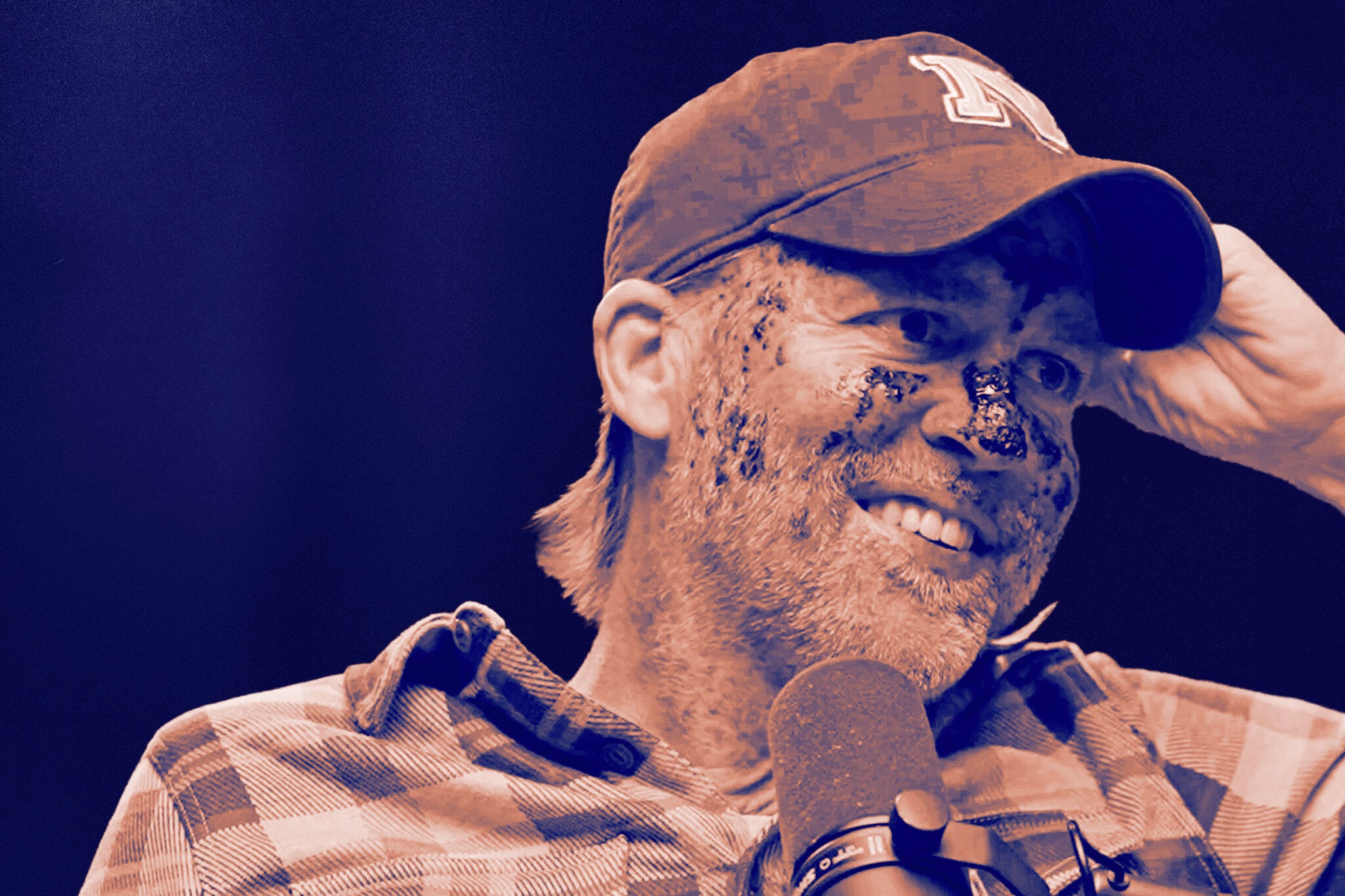
When I listen to a story like that I feel (honestly) selfish for my reticence about suffering more now. It’s all brought into view a question about freedom, the big question of the week that Amber Lapp and I are turning over, in conversation Wendell Berry’s “Sex, Economy, Community, Freedom.”
I realize a lot is going on here: cancer drug rejection, impending mortality, Kentucky agrarian philosophy. So, just to complicate things, I’ll add some scripture. There’s two passages I’m curious about. One goes back to the shepherd and the sheepfold when Jesus says he is the gate he says the sheep come and go through him, into the fold and out to the pasture:
Therefore Jesus said again, “Very truly I tell you, I am the gate for the sheep. 8 All who have come before me are thieves and robbers, but the sheep have not listened to them. 9 I am the gate; whoever enters through me will be saved.[a] They will come in and go out, and find pasture. 10 The thief comes only to steal and kill and destroy; I have come that they may have life, and have it to the full.
At another point, Paul tells us that Christ’s liberating act in death and resurrection is for freedom itself:
For freedom[a] Christ has set us free. Stand firm, then, and do not be subject again to the yoke[b] of slavery. You who are trying to be declared righteous[d] by the law have been alienated[e] from Christ; you have fallen away from grace! 5 For through the Spirit, by faith, we wait expectantly for the hope of righteousness. 6 For in Christ Jesus the only thing that matters is faith working through love.[f]
So my question really is, “what is freedom” and more importantly, “what is freedom for?” Jesus says we are free to come into the safety of the fold and out into the pasture; Paul tells us not to come under the yoke of the law but to lean into grace, to let the only thing that matters be faith working through love.
Wendell Berry argues that freedom, American style, only makes sense when placed in the context of responsibility, and that the responsibilities we’re called to are outlined by relationship and community. Freedom is for building a world that people want to live in and a life people want to rub up against. The misuse of freedom must be litigated by community, for the sake of holding on to the higher good of shared life.
Reading the Berry essay brings me back to my own personal freedom. When I went to the oncologist early on, he told me, “You don’t have to do anything. It’s your body.” I sat with that with a great degree of seriousness. At various points I’ve been staunchly pro-choice, a feminist definitionally. Yes, I wanted to say, it is my body. 20+ years ago, when diagnosed with leukemia, I watched my mom take every treatment. As her skin broke into boils, an outcome of chemotherapy, I rubbed frankincense on her wounds until they came to a pus filled head. In the hospital with her at her death, I told myself I’d not go that way, when it was my time.
My freedom to choose last summer left me choosing a treatment regimen that prioritized bodily pleasure, participation and life now. I didn’t have my breasts removed and reconstructed because, while they would look better, they’d have no feeling. The reconstruction too would leave my mid section and my thighs numb, fat removed from areas people want fat removed but textured with scars vast and deep— a patchwork of skin with no sensation, valuable only for how I’d present my reshaped form to the anonymous world. The whole process, which would have occurred last September, also meant a cancellation of our fall religious education program at Lydia’s House, a no that it pained me to say.
But when I made the choices to do less surgery, removing only the section with active cancer cells, I implicitly decided to increase my risk of possible cancer recurrence.
With the medications, one left my leg throbbing. I could bear the indignity of bulging veins, but the fear that I was having an aneurysm was too much. With the other medication, the headaches rendered me a non participant in my life and my family.
If I were my mother, diagnosed with leukemia, or Ben Sasse, given the awful news of stage 4 cancer, would I choose a different course? Probably. If the murky horizon offered only death or painful, constantly medicated life, perhaps I’d take the pain for some number of months to say goodbye and get my affairs in order. Honestly, I don’t know.
I’m with Catholicism on assisted suicide, but what of choosing less suffering and less longevity, not actively choosing death, but intentionally choosing a shorter, un-medicated life? I’ve consulted around to my personal circle of religious ethicists and it seems I’m under no obligation to endure daily suffering for possible better cancer outcomes but, of course, I try not to deal in rights and obligations, but rather gifts and sacrifices.
What I know clearly is that my life is not my own. By virtue of many choices my body and the implications of my health are shared with Ben and the kids and Meridith, to a lesser degree with the families we support at Lydia’s House, and at a mystical level with Christ and the Church. I no longer have such a thing as bodily autonomy, despite what the oncologist said. I’ve talked to Ben and Meridith. They agreed with me not to have the full mastectomy, not to continue tamoxifen or exemestene. But the worry is present; it’s not light when I bring up these questions.
Today, at the oncologist, after he reviewed options he said, “There’s another med we can offer. It’s side effects are different. Do you want to try it?” Ben sat with me; he didn’t weigh in. I felt heavy with the possibility of this next turbulent round of, well, who knows… I thought about how it might interrupt my speaking engagement in DC at the end of the month, a trip I have planned to NY, summer camp at Lydia’s House. And then I thought about my beloved circle of family and chosen family. Is faith working through love trying medication after medication?
Taking a page from Wendall Berry, I’ll say community is the best ethical framework I can lean into, as I actively sort through this treatment quagmire. I don’t want to try another med. I just do want to roll the dice and keep feeling fine. But I said yes to letrozole and, with heaviness, told them to call it into CVS.
The conclusion of this week is that I best live the days that I feel good well: pour out my life for the sake of the good fight; be present to the people I say I want to be present to; appreciate pain free embodiment on the days I have it. If the freedom I’m exercising balances feeling good in my body against feeling less good for the sake of longevity, I don’t want to discount either costly outcome.
Feel free to ask me if I’m holding both the present and the future with care or tell me that I’m not. This year of writing, thinking about a bad illness and a good life, is a year of learning in public. I want to correct course if I’m off because, the honest truth is, I could be sitting in Ben Sasse’s chair in 5 years. Any of us could really.
And for the sake of sharing some goodness today, here’s some pictures of the week that just ended.
We gave away a van at Lydia’s House. It was great. The photo is of the winner just after we shared the news. And we crashed the Xavier end of year party to take advantage of riding the bull. No surprise, Jacob is a pro. Sam went back to soccer after a wrist break hiatus. And Ben and I celebrated 18 years of marriage, with his mom and dad and aunt and uncle, who share the same anniversary. Purcell Marian had prom— Annie was channeling Barbie for her thrift-ed prom look.


And this weekend we head to Richmond, Indiana to celebrate Meridith graduating with her Masters in Divinity from Bethany Seminary. Congratulations to my dearest friend and sister in Christ on this milestone.
Have you read A Long Obedience in the Same Direction by Eugene Peterson? I just read the chapter on Hope. It reminds me of your journey.
I also saw the Ben Sasse interview. It was inspiring to see someone in the midst of the worst with such joy. It also brought me to tears.
Something about the way you are living this journey amazes me and gives me a glimpse of what walking with God really means.
Praying the 3rd time will be the drug that works.
My heart hurts for you, Mary Ellen, and it also admires you and how you're sharing your wisdom with us.