The Intersections
transcendence hits immanence, awful meets everyday

Ben and I were talking on the back patio during one of the sunny afternoons this week when I asked him, “Do you ever wonder what it’s like to live in an actual war? I’ve been thinking about the Middle East. Do you just take your kids to soccer practice and wonder if maybe you’ll get bombed?” He answered with a story from one of his long history tomes. During the Normandy invasion, a woman went down to the beach to retrieve her bathing suit, having no idea what she was about to encounter. She arrived as the soldiers were landing and, noting the need, stayed to bandage wounds.
So perhaps the answer is yes. Ordinary life keeps going right up until the moment it’s profoundly interrupted.
Sunday at church a friend I’ve known for years through Lydia’s House, one of our early guests, brought her grandfather and her 7 year old. By all appearances, they’d never been to Catholic mass but came because I invited them. The 7 year was next to me so I held her close when she started to deteriorate during the lengthy homily.
About 40 minutes in, truth be told, we were all fading. In an attempt to regroup I whispered in her ear, “Do you see the purple cloth on the altar? What does that mean?” She smiled up, like a light went off, and said “preparation.” I’ve taught her in religious education for years at the shelter, repeating the liturgical seasons and their colors like a mantra, setting and resetting the tiny altar with the appropriate hue of fabric. At that moment it all came together, both for her and for me.
This week I’ve been thinking about the way startling realizations cut into ordinary life—how the awful can interrupt the beautiful, how transcendence can cut into the everyday. We live holding the divine and the human in tension, but sometimes the divine suddenly overwhelms us.
The image that keeps coming to mind is an intersection because the simplest way I can picture two worlds meeting is a vertical line crossing a horizontal one. Once that image took hold in my psyche, I began to see these intersections everywhere: moments when the physical and the metaphysical collide.
Because the topic of this substack is my cancer treatment, on the cancer front the unexpected interruption showing up in my horizontal “normal” plane is migraines. The migraines are a side effect of the estrogen suppression medication “Exemestane,” a tiny pill that could have monumental effects in the long run. For today, the medicine is breaking into my daily routine like a railroad spike hitting my cranium about 2pm daily, reminding me of my frailty and mortality. The migraines announce themselves during soccer games or while cooking dinner. They stop me momentarily or for hours, and yet life needs to keep going on. I rub my temples, I take Excedrin, I drink water, and I yell, “Pass it to Sam! He’s open.” The awful of cancer intersects with the normal or the beautiful; the migraines are a new iteration but a continuation of what’s been happening to my body since last July.
There are many ways saints and mystics describe the meeting of the mortal and the eternal, the awful and the awesome. Some call these encounters “thin spaces.” The space is thin because the force of eternity presses into ordinary life—not usually with a chorus of heavenly angels, but with something quieter: a kind of trance-like awareness that the two worlds are not so separate after all. The normal and the paranormal are dancing together. Or sometimes wrestling.
The most profound experience I’ve ever had of this thinning of the veil was when my mother died. We knew it was coming as she’d exhausted all treatment options. Her organs had started shutting down and she was on a ventilator, but technically she was alive. Many in the family had gone home, but my great aunt, my grandma, and I stayed through the night. The machines gone, I laid up against her body and felt her take her last breaths. The air pulsed around us, overtaking the rhythm of the fading heart beat in her chest. Heaven was actually meeting earth, or she was meeting heaven, and those of us in the room got to accompany her for a few long minutes. Maybe it was hours. Part of this experience is the absence of time.
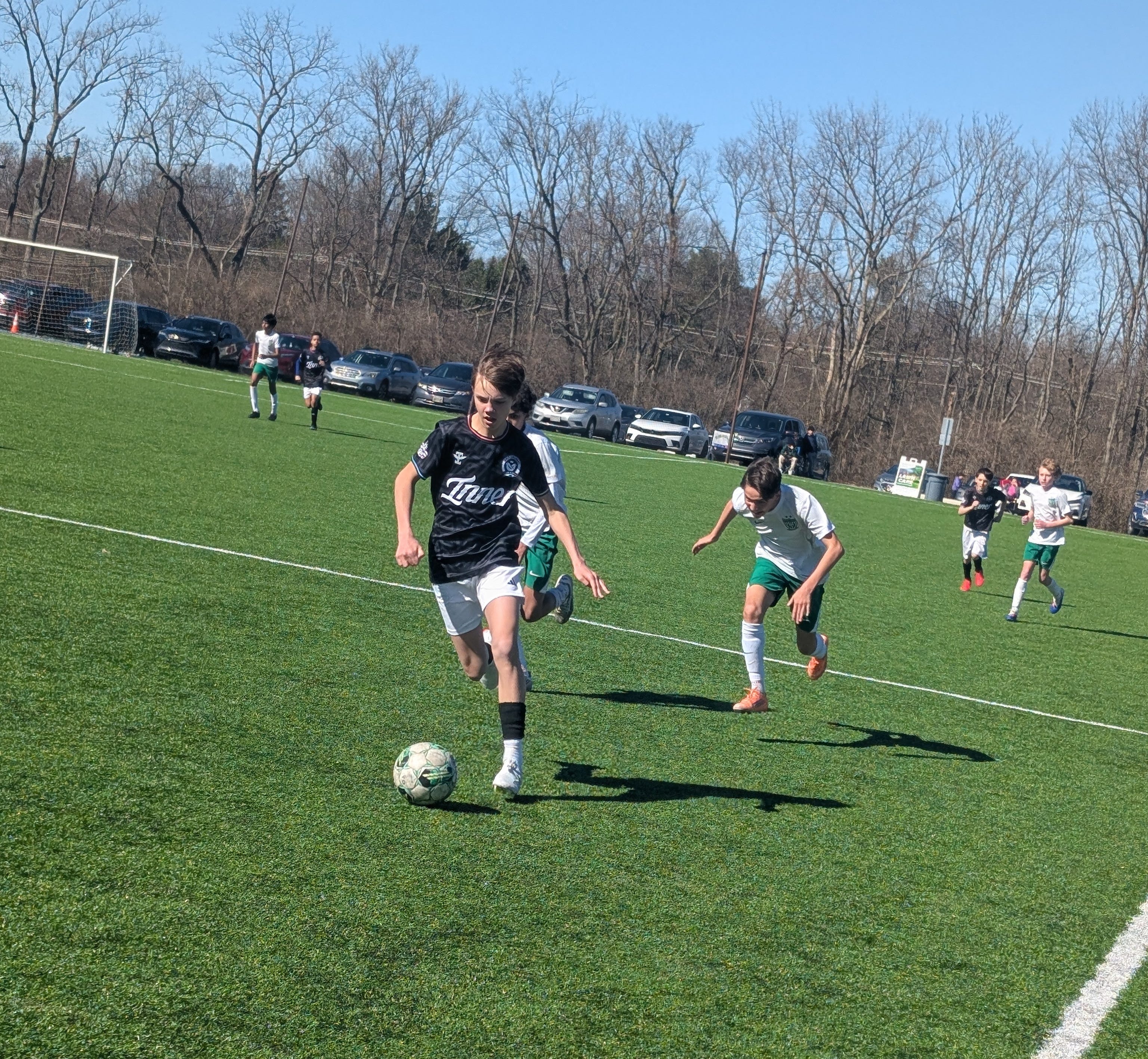
Deaths and births are often cited as the thinnest of spaces, but I’ve noticed that the profound breaks in for a few seconds often. Jacob explained to me last night why Easter happens when it does, using the words “spring solstice” and I had this moment of like “wow, he’s a full human.” Sam ran with his last gasp of energy, chasing the ball during his game Sunday afternoon. His adolescent form was suddenly like a god inhabiting a mortal body, his aching legs flying as he tried for a goal. I thought, “that child is amazing… and was born from my body.” Annie argued her mock trial case exclaiming, “Justice at the expense of the 4th amendment is not justice at all,” and the room went silent. Parenting gives frequent opportunity to touch the eternal, realizing that the child you nursed is now a fully separate and potentially active participate in the redemption of this broken world.
The most common way Catholics see the worlds touching is in the Eucharist, the priest actually calling down the Holy Spirit to inhabit the bread and wine, transfiguring them into the body and blood of Christ. Bread can be made from flour and water but in this daily miracle it’s changed, suddenly, into the most holy physical form Christians can imagine. Sometimes this experience elicits a feeling of profundity in the partakers but more often, I observe, it reminds us that the profound can happen; that the holy can and will break in.
For me the continued invitation I’m sensing, as I become acutely attuned to these intersections, is to stay awake—even as the headaches make me want to retreat. This call reminds me of an often quoted Rumi poem that once hung on the shelter wall, a fitting ending for today:
The breeze at dawn has secrets to tell you.
Don’t go back to sleep.You must ask for what you really want.
Don’t go back to sleep.People are going back and forth across the doorsill
where the two worlds touch.The door is round and open.
Don’t go back to sleep.
And the news….
Annie got wait listed for UWC. She got the mediocre news while teaching religious education, so it was quite the intersection of two things. We’re all kind of shocked, because I’ve been on the selection committee for a lot of years (I recused myself this year) and Annie is top notch, really stronger in many ways than the teenagers I’ve interviewed. But we’re going to accept it as God’s timing. I have to admit that, if she’s home next year, I won’t be sad about it.
Really sitting with what you said about parenting being a way to touch the eternal. Grateful to get a glimpse of it through your eyes. Thinking of yall ❤️
Such heavy thoughts that are good for us to hear. Dane and I are participating in a Lenten group of 7 people, 3 of whom are 20-30ish. They are struggling with how to pray in the midst of this war. Last week the question of what does God control came up. The view ranged from everything, to allowing everything, to trusting us with choices. Last week the struggle was what can we do? They are carrying maybe for the first time the weight of this war even without living there. Somehow just living our “normal” lives doesn’t feel right.
I love Ben’s story from Normandy. Somehow we need to do the same- bandage each other’s wounds even if we are not in the middle of the actual battle. We are in a different kind of battle here, a battle of somehow trusting God as it feels like things are out of control.
I’m hopeful Annie still makes it in, but love for you may keep her here. Even though I don’t know her very well I am still super proud of her and Sam. You and Ben have done an amazing job with your kids.
Praying relief from migraines. Dane’s mom used to take Benadryl for them and it seemed to help. You continue to bandage the wounds in spite of them.